Your cheapest energy plan can change with the season
The cheapest plan in summer can cost more in winter. Nemity prices every published plan on your own usage, for the months you’ll actually be on it.
Free. Start with an estimate, or use your own meter data.
SummerCovaU SolarMax wins by $69
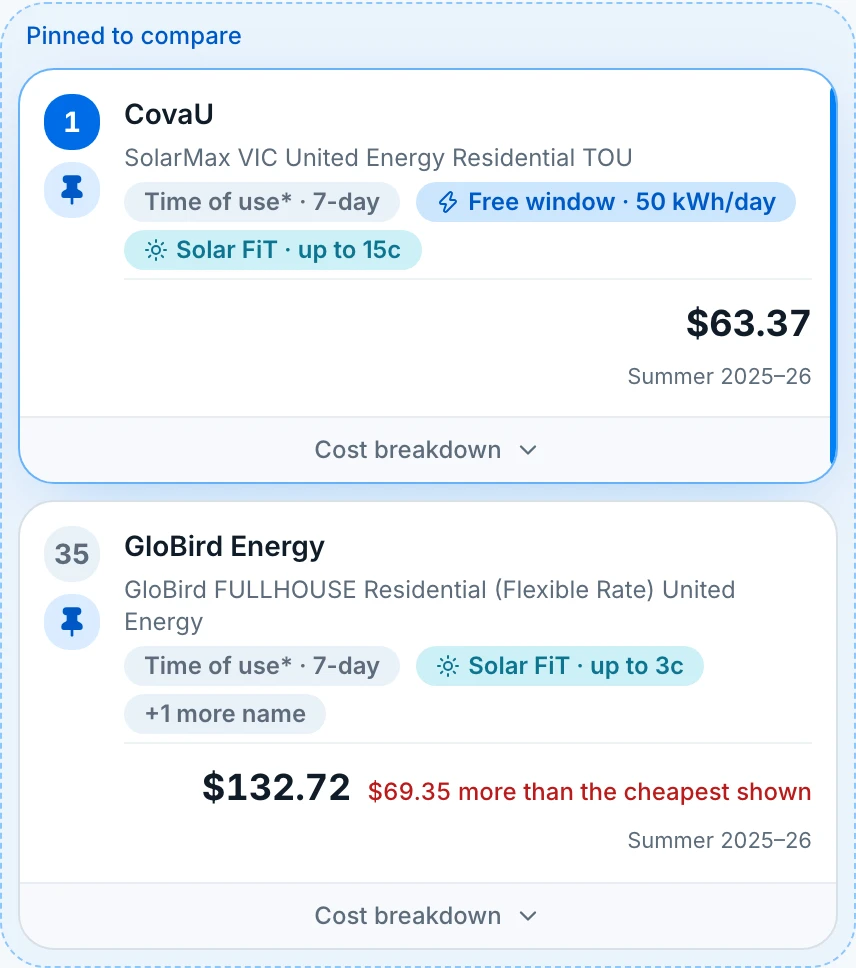
WinterGloBird FULLHOUSE wins by $162
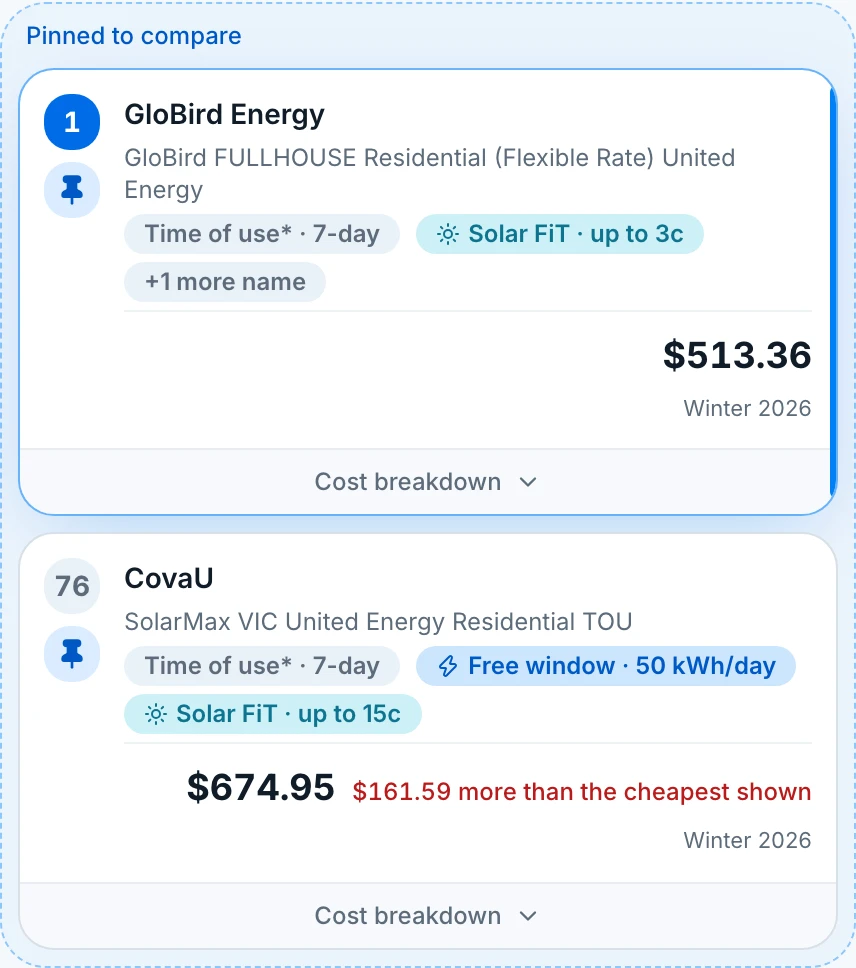
Stay on CovaU SolarMax through winter and you pay $162 more.
Why Nemity?
Nemity has one job: finding you the cheapest plan for the months you’ll be on it.
Here’s how. No other free Victorian comparison site does all of these together:
- 01Prices every published plan over the months you choose, not an average year
- 02Notices when your usage changes, such as a new EV or battery, and can price every plan on how you use power now
- 03Counts money written only in a plan’s description, wherever it can read it
- 04Shows which plan could be cheapest if you’re flexible about when you use power
- 05Shows which plan could be cheapest with a battery, an EV or solar, before you buy
Your period, not an average year
Price every plan over the next 3 or 6 months, a single season, or your own dates. Victorian Energy Compare ranks offers by their “annual estimated prices”.
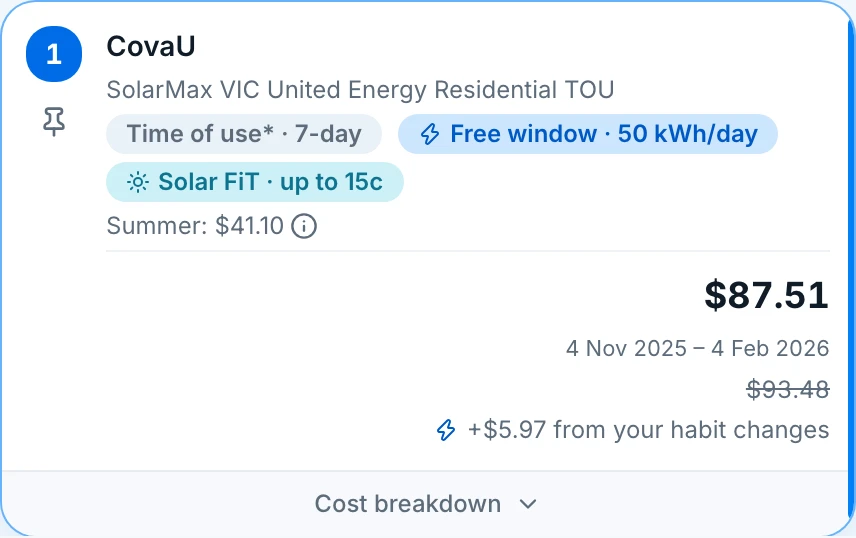
Take our demo household. In summer, the cheapest plan it can take is CovaU SolarMax. In winter, it’s GloBird FULLHOUSE. Stay on CovaU SolarMax through winter and you pay $162 more. Stay on GloBird FULLHOUSE through summer and you pay $69 more.
It notices when your usage changes
Recently bought an EV or a battery? Your next few months won’t look like your last 12.
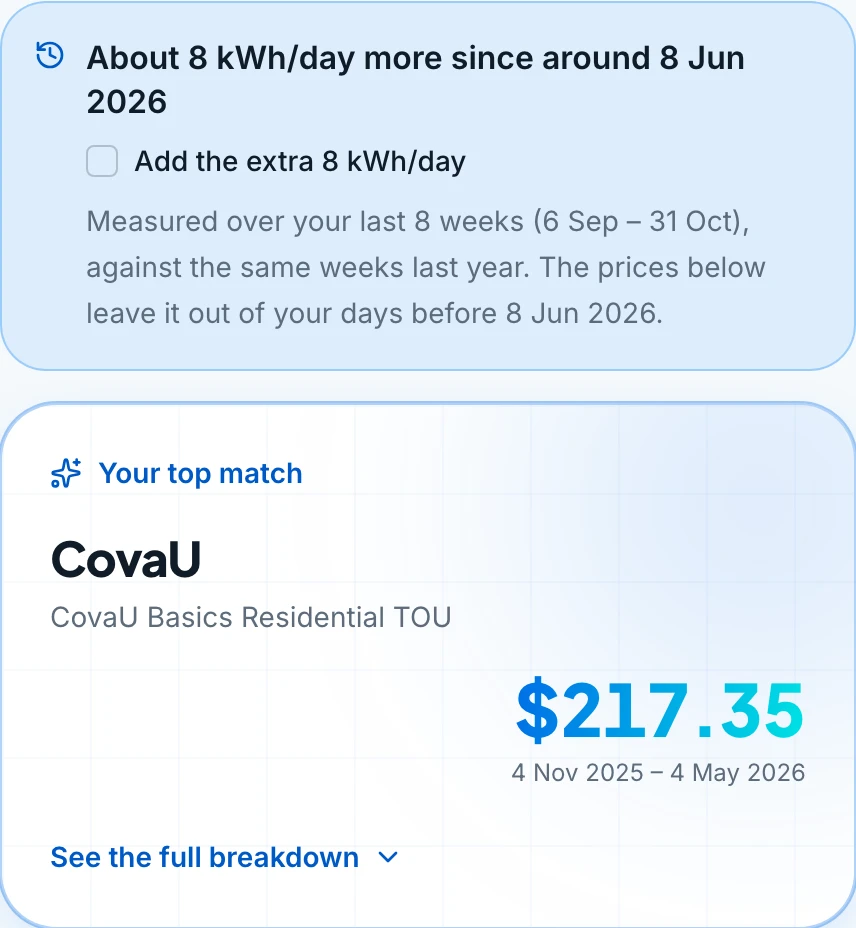
Upload two years of meter data. Nemity compares your last 8 weeks with the same weeks a year earlier. If the difference is bigger than normal, it tells you. If it can tell when the change started, it offers to price every plan as if you’d had it all along. Nothing changes until you say yes.
Added a battery to your solar panels? Nemity spots that too, because your nights stop using the grid. Type in the battery’s size, and it prices every plan as if you’d had the battery all along. It’s an estimate, and the note says so.
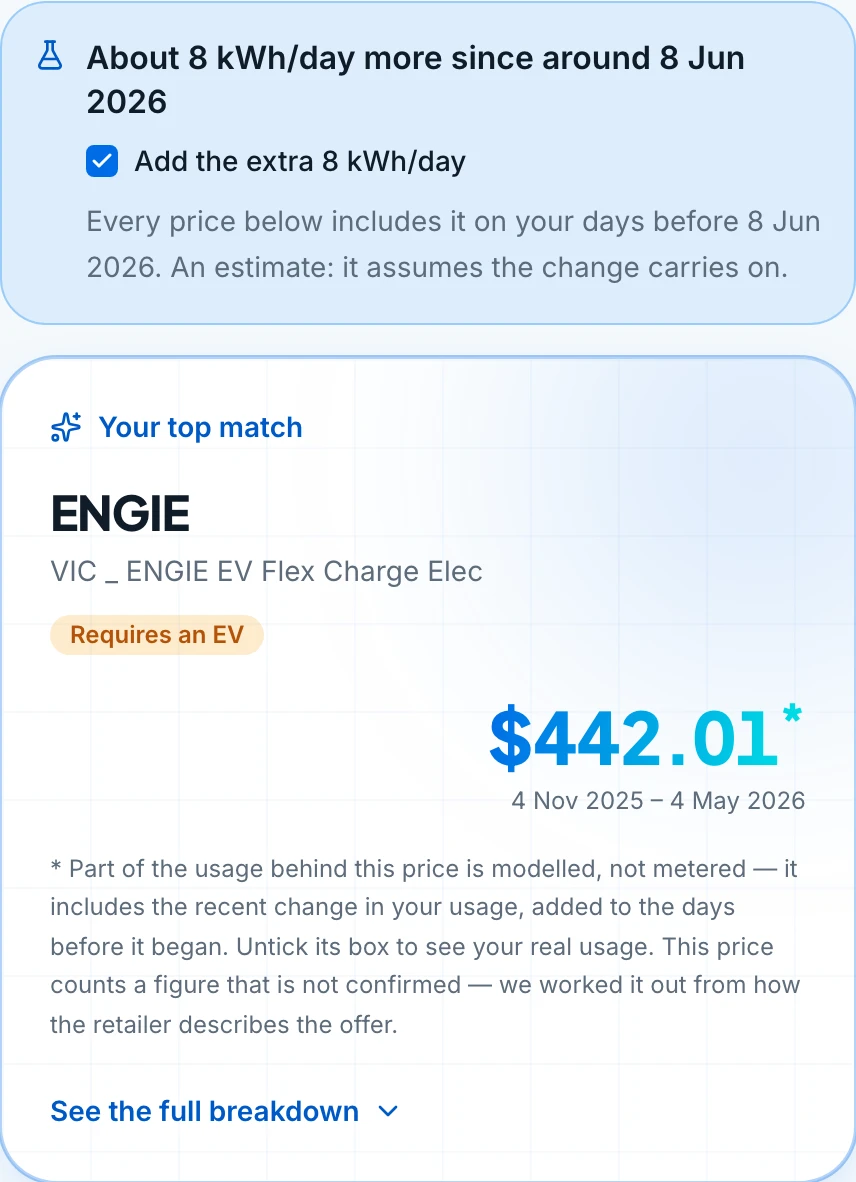
Our demo home started charging an EV overnight in June. Nemity doesn’t know it’s a car. It just says: “About 8 kWh/day more since around 8 Jun 2026.” Say yes, and the cheapest plan for the next 6 months changes from CovaU Basics to ENGIE EV Flex Charge.
It counts money in the fine print
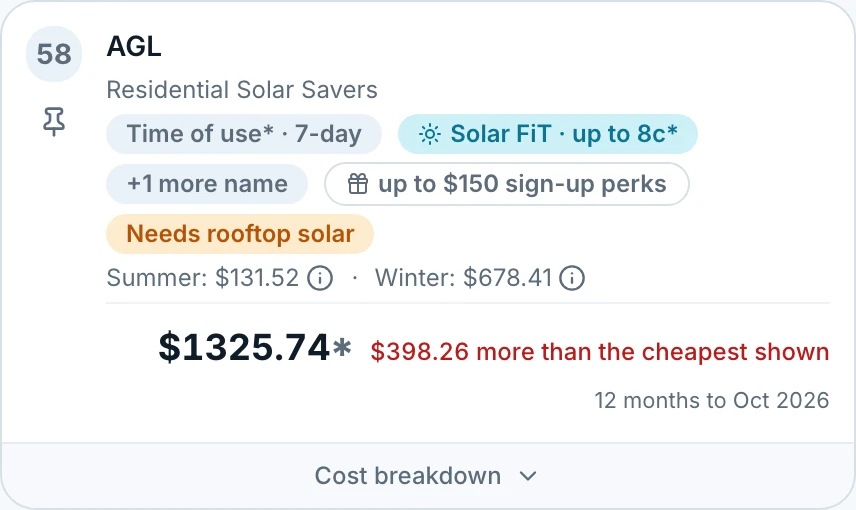
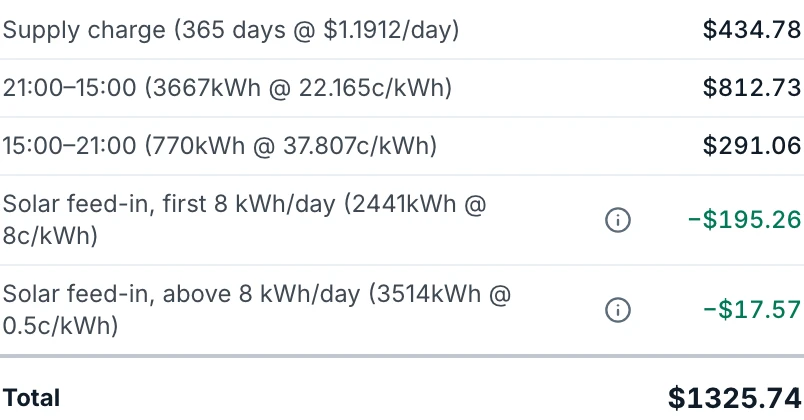
Some plans mention a credit or a higher feed-in rate only as plain text in their description, not in their rates. Nemity adds that money to the price wherever it can read it. A credit counts only as far as your bills in that period can use it.
AGL Residential Solar Savers and Alinta SolarBalance Now both pay 8c/kWh for the first 8 kWh you export each day. They say so only in their description. Victorian Energy Compare uses their listed rates instead: 0.5c and 0.04c. For our demo household, the 8c is worth $183 (AGL) and $194 (Alinta) over the last 12 months. Victorian Energy Compare does count a credit that a retailer lists as a discount. It only misses money that’s written in words.
Flexible about when you use power?
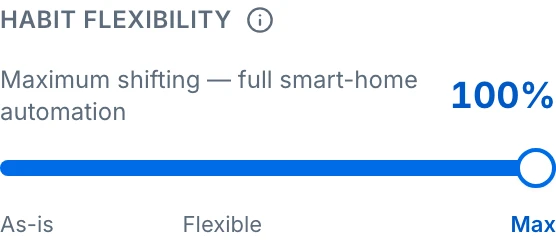
Move the habit flexibility slider to see what each plan could cost if you ran the washing, hot water or EV charging at cheaper times. Nemity re-prices every plan as you move it, and each card shows what you could save. It’s an estimate.
Before you buy a battery, an EV or solar
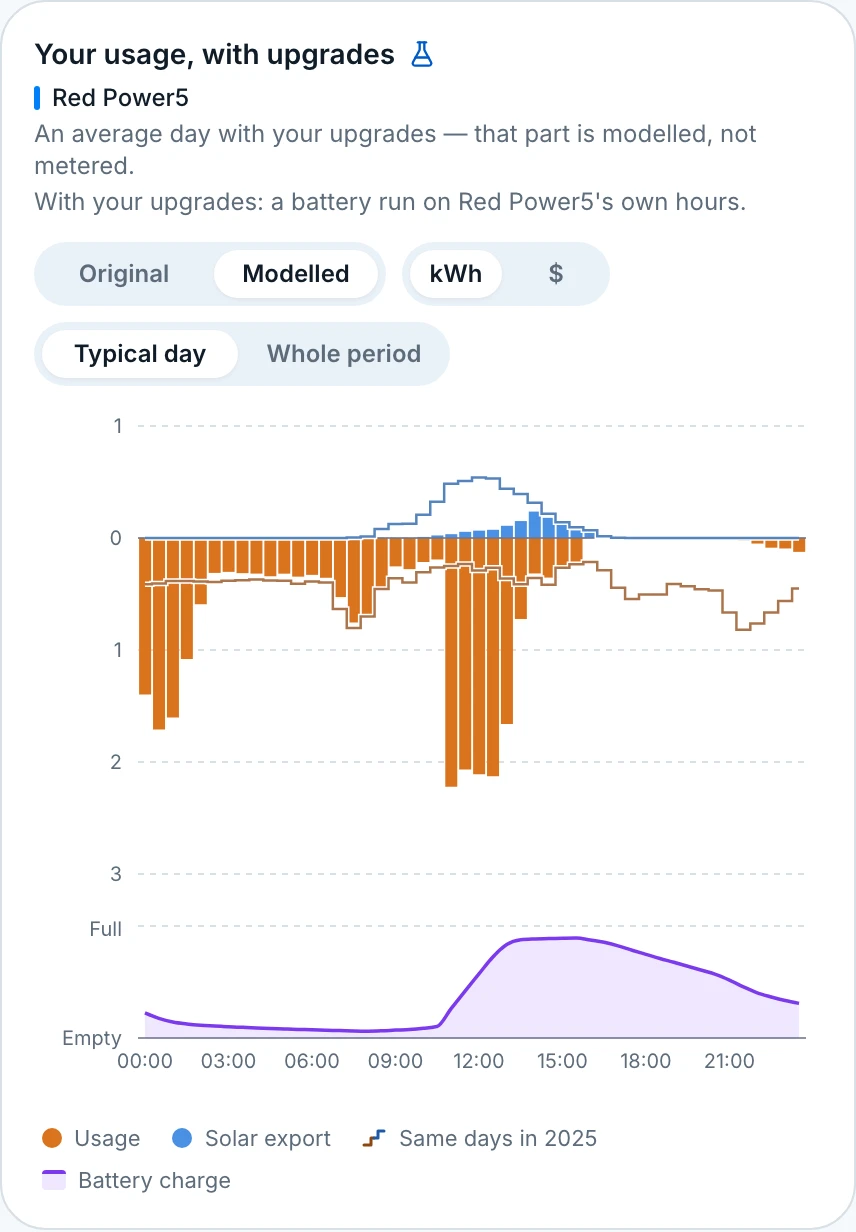
Add a battery, an EV or more solar panels, and Nemity re-prices every plan as if you had it. It’s a rough simulation, not a forecast. Use it to see which kinds of plans could suit you before you buy.
See your own usage
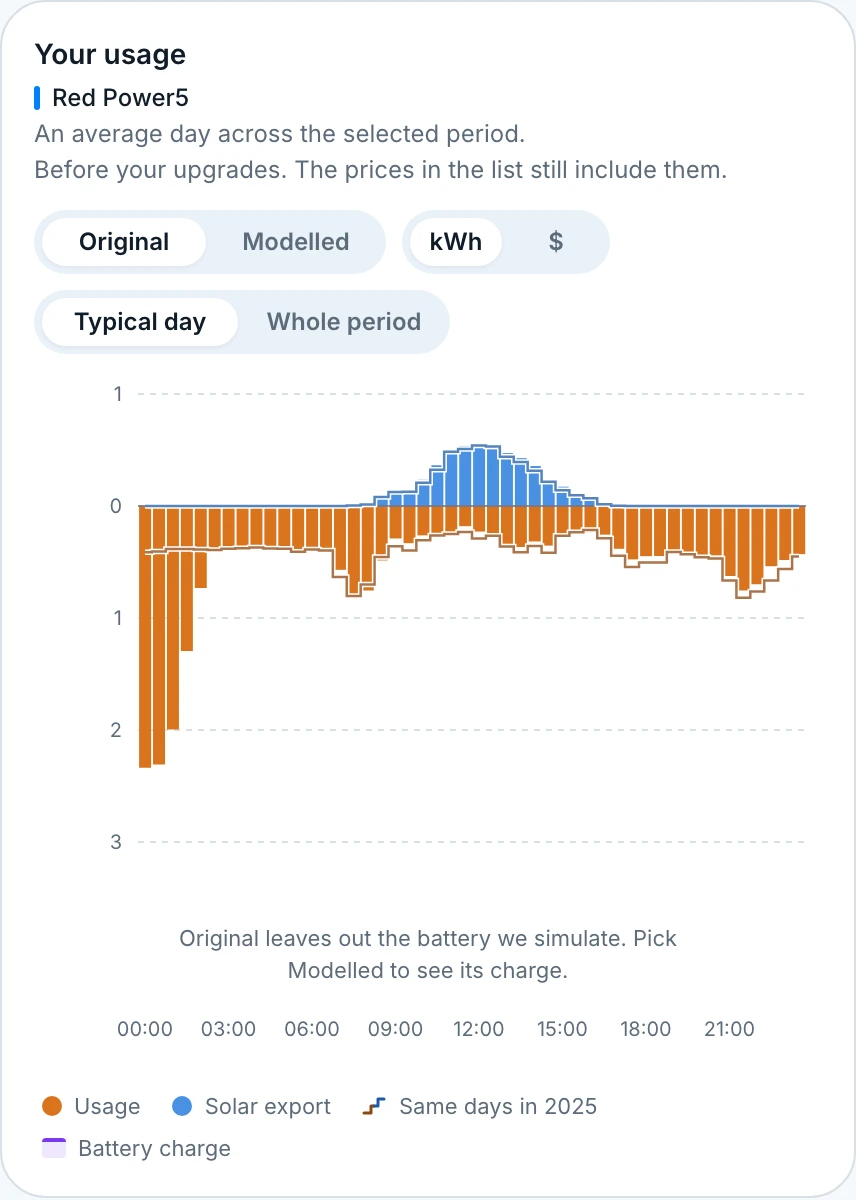
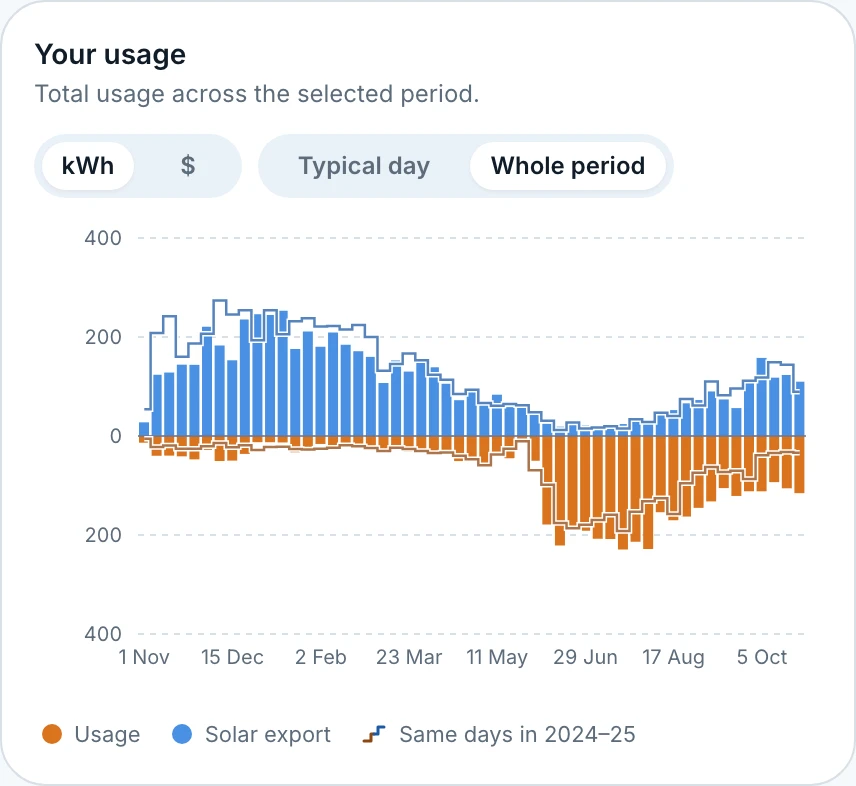
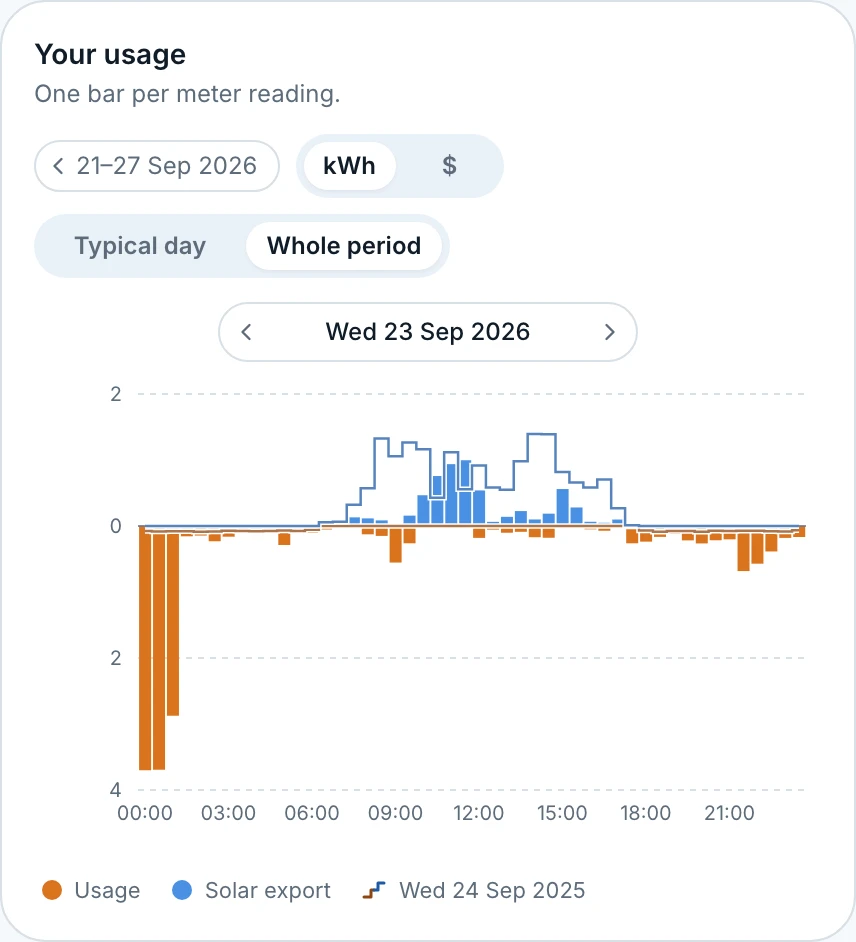
Your results come with a chart of your own usage, in kWh or dollars. Open a week to see its days, and a day to see its meter readings. A second line shows the same days a year earlier, so changes stand out. In the demo, you can see the EV from June.
- Completely free to use.
- Your meter data is read in your browser and never leaves your device.
- Plans from the AER’s official Consumer Data Right feed, refreshed weekly.
Nemity and Victorian Energy Compare, side by side
Victorian Energy Compare is the Victorian Government’s free comparison site. It does some things Nemity doesn’t.
| What | Nemity | Victorian Energy Compare |
|---|---|---|
| Prices your own meter data | Yes | Yes |
| The period it prices | The next 3 or 6 months, a season, or your own dates | One yearly estimate |
| Money mentioned only in a plan’s description | Added to the price wherever Nemity can read it | Left out of the price |
| A recent change in your usage | Spotted, and priced if you say yes | Uses the average of your file’s last 12 full months |
| Moving your usage to cheaper hours | A slider re-ranks every plan (an estimate) | Not supported |
| A battery, an EV or more solar | Every plan re-ranked (a rough simulation) | A Solar Calculator for panels only, using rates you type in |
| A chart of your usage | Beside your results | Not in its offer list |
| Remembers your answers | Yes, on your device | Only until your session times out |
| Gets your meter data for you, from your NMI | No, you upload the file, for privacy | Yes |
| Energy concessions | Prices are before the concession, but the cheapest plan is the same | Yes, if you have one |
| Demand-tariff plans | Left out | May list them |
Victorian Energy Compare checked on 1 Nov 2026. Its offers and features may change.
Questions people ask
- Is Nemity free?
- Yes. Nemity is completely free to use, with no sign-up.
- Does Nemity compare gas plans?
- Yes. Nemity ranks every Victorian gas plan in the official CDR feed. Gas needs no file. You just type in the usage from one summer bill and one winter bill.
- Do I need my meter data?
- No. You can start with an estimate from a few questions about your home. Your meter data gives a more accurate answer, because it shows when you actually use power. You can get it free from your distributor or retailer. It takes about 5 minutes the first time.
- Does Nemity count sign-up credits?
- Yes, including credits a retailer mentions only in a plan’s description. You choose how plans are ranked: on ongoing cost alone, or including one-off sign-up credits. A credit counts only as far as your bills in that period can use it. So a plan that is cheap only because of its sign-up bonus shows as exactly that.
- How is Nemity different from Victorian Energy Compare?
- Both can price plans on your own meter data. Victorian Energy Compare gives one yearly estimate. Nemity prices the period you choose, such as the next 3 months or a single season, and can estimate what every plan would cost with solar, an EV or a battery before you buy. Victorian Energy Compare can also get your meter data for you, include a concession, and may list demand-tariff plans. Nemity does none of these, but they’re very unlikely to affect the cheapest plan you see.
More in the FAQ, and how every figure is worked out in how cost is calculated.
See which plan wins your next 3 months
Free. Start with an estimate, or use your own meter data.